Taking a moment to remember the city I grew up in and went to film school at. The pictures below are from some film shoots I did just a block away from where the recent terrorist attack took place...
The recent events in Boston hit home for many of us and seeing the images of the explosions on Boylston street were emotional for me. I lived right around the corner and worked just blocks from where the event at the Marathon took place.
I hope for a speedy recovery for all those who were affected by this tragedy...
Sunday, April 21, 2013
Visual Effects Documentary; Hollywood in the Berkshires
Wednesday, April 17, 2013
Infographic: the Evolution of Visual Effects in Film History
Ive created an info graphic illustrating the various high points in the evolution in the development of visual effects in feature films. Obviously some key films are absent. I tried to show some of the largest leaps in technology starting with Melies classic A Trip to Moon.
Many films that followed since have had a lasting effect on the industry of filmmaking. King Kong was significant because it was one of the first films to feature a main
character using the stop motion animation process.
Many films that followed utilized these techniques but Kong made a lasting impression that defined the industry for decades.
In a similar vein, 2001: a space Odyssey was also a defining moment in the history of cinema and the visual effects industry in terms of it's aesthetic detail in how the effects and set designs were realized.
Star Wars (1977) ushered in a form of visual effects photography with the use of motion controlled cameras which were used for decades to shoot miniatures that needed multiple passes done with precision. This technique was the standard for decades until the advent of Computer generated Imagery (CGI)
Tron (1982) was a harbinger of the future as several of the major effects sequences were computer generated at a time when using computers as a filmmaking tool was expensive and untried. It paved new ground for the technology used in future films.
JURASSIC PARK and THE ABYSS took CGI to the next level, photo realism. The various effects scenes in these films represent some of the earliest breakthrough work in the field of integrated CGI thanks to the team of the computer engineers at ILM.
In terms of information for this medium, twitter has been a great resource for sharing ideas and concerns regarding the vfx and technology industries in this field. I have been using FACEBOOK quite a bit in my VFX archive because it's great to use as a historic repository for images.
Many films that followed since have had a lasting effect on the industry of filmmaking. King Kong was significant because it was one of the first films to feature a main
character using the stop motion animation process.
Many films that followed utilized these techniques but Kong made a lasting impression that defined the industry for decades.
In a similar vein, 2001: a space Odyssey was also a defining moment in the history of cinema and the visual effects industry in terms of it's aesthetic detail in how the effects and set designs were realized.
Star Wars (1977) ushered in a form of visual effects photography with the use of motion controlled cameras which were used for decades to shoot miniatures that needed multiple passes done with precision. This technique was the standard for decades until the advent of Computer generated Imagery (CGI)
Tron (1982) was a harbinger of the future as several of the major effects sequences were computer generated at a time when using computers as a filmmaking tool was expensive and untried. It paved new ground for the technology used in future films.
JURASSIC PARK and THE ABYSS took CGI to the next level, photo realism. The various effects scenes in these films represent some of the earliest breakthrough work in the field of integrated CGI thanks to the team of the computer engineers at ILM.
In terms of information for this medium, twitter has been a great resource for sharing ideas and concerns regarding the vfx and technology industries in this field. I have been using FACEBOOK quite a bit in my VFX archive because it's great to use as a historic repository for images.
Summer Movie season near: New Superman Trailer
Looks like Zack Synder and company are taking this in a different visual direction than the predecessors.
Check out this link for the latest images
http://www.huffingtonpost.com/2013/04/17/man-of-steel-trailer-superman_n_3097225.html?ref=topbar
Check out this link for the latest images
http://www.huffingtonpost.com/2013/04/17/man-of-steel-trailer-superman_n_3097225.html?ref=topbar
Saturday, April 13, 2013
The Visual Effects Industry implosion and the movement to save it
Over the past few months I have been writing about the visual effects industry, past present...but not the future. Because it's hard to tell what the future will be. Everyday more effects facilities are shutting down or laying off employees in large numbers. If history is any indication, we may see a replay of what happened to the American animation studios in the 50's and 60's. Due to the rising cost of labor during the economic boom times of post war USA, Movie studios were forced to move their cel animation operations overseas where trained labor was significantly cheaper. It never returned. CGI and digital effect technology is no longer exclusive to the US and Canada. Now everyone has the science at their disposal. The question seems to remain..can the industry survive in Western countries that are competing with third world dollars. Will a trade organization that is embraced industry wide save this faltering sector of the entertainment world?
Ask anyone who decides to work in the field of effects and they'll almost always tell you they do it for the love of film and creativity. Very few people enter this field to get rich. But even a modest salary in the United states is significantly higher than in China or India where cost of living and hourly wages are lower. It's simple math. Hollywood is a business and like any other...the steel and textile industries for example...cost to profit considerations are first and foremost. It may be a little naive to think that every country and every effects company will go along with collective bargaining or trade organization structuring. But anything is possible at this point.
A great site for daily developments in this field is vfxsoldier.com. An anonymous visual effects industry journalist who has been following recent trends and developments in this area of entertainment (Most recently alleged layoffs at Sony Imageworks).You can follow his blog below at
www.vfxsoldier.com
also another site that has been posting many personal stories of the impact of these industry wide changes can be found at vfxsoldiarity's Facebook page
link at
https://www.facebook.com/VfxSolidarityIntl
This is an ongoing story not just of this niche section of the entertainment industry but the ongoing narrative of our livelihoods being shipped out overseas. Very soon we may no longer have a creative work force here in the United States. We will just become simply a nation of consumers who no longer create for art or even leisure.
It's something to contemplate on
http://www.youtube.com/watch?v=vYtqkJWcdB0&feature=youtu.be
Ask anyone who decides to work in the field of effects and they'll almost always tell you they do it for the love of film and creativity. Very few people enter this field to get rich. But even a modest salary in the United states is significantly higher than in China or India where cost of living and hourly wages are lower. It's simple math. Hollywood is a business and like any other...the steel and textile industries for example...cost to profit considerations are first and foremost. It may be a little naive to think that every country and every effects company will go along with collective bargaining or trade organization structuring. But anything is possible at this point.
A great site for daily developments in this field is vfxsoldier.com. An anonymous visual effects industry journalist who has been following recent trends and developments in this area of entertainment (Most recently alleged layoffs at Sony Imageworks).You can follow his blog below at
www.vfxsoldier.com
also another site that has been posting many personal stories of the impact of these industry wide changes can be found at vfxsoldiarity's Facebook page
link at
https://www.facebook.com/VfxSolidarityIntl
This is an ongoing story not just of this niche section of the entertainment industry but the ongoing narrative of our livelihoods being shipped out overseas. Very soon we may no longer have a creative work force here in the United States. We will just become simply a nation of consumers who no longer create for art or even leisure.
It's something to contemplate on
http://www.youtube.com/watch?v=vYtqkJWcdB0&feature=youtu.be
Friday, April 12, 2013
Celebrating the 50th anniversary of Jason and the Argonauts
When film fans and critics usually discuss their favorite genre films they tend to bring up Lord of The Rings, Avatar, the Stars Wars and Alien. One film that is often left out of the discourse is Ray Harryhausen's 1963 classic Jason and the Argonauts. It is a groundbreaking film in many ways. Although it was a modest success during its initial release, Jason gained it's massive cult following after decades of TV and cable showings and the fandom generated garage kit model craze that came to it's zenith in the late 90's. Jason features some of Harryhausen's greatest stop motion achievement's. It is said by many critics(and Harryhausen himself) that the skeleton battle at the film 's climax is the crowning achievement of his career. But Jason is also a wonderfully engaging film, full of excellent performances , spectacular locations (filmed in coastal Spain among other spots), beautiful production design and wonderful mythological characters. It's easy to see how this film has inspired not only future generations of visual effects artists and film directors but also might have been instrumental in encouraging young people to study mythology and literature.
More pictures can be found at the Visual Effects Archive Page
see link
https://www.facebook.com/media/set/?set=a.432955050127982.1073741911.394337563989731&type=1
Wednesday, April 10, 2013
coolvfx visual effects archive page is now The Visual Effects Archive Page
I have updated my facebook archive page and changed the name so hopefully it will be easier to search for and find.
I invite everyone to visit. Please hit "Like" if you enjoy the content and want to see more of the history of filmmaking.
link below
http://www.facebook.com/pages/The-Visual-Effects-Archive-page/394337563989731
I invite everyone to visit. Please hit "Like" if you enjoy the content and want to see more of the history of filmmaking.
link below
http://www.facebook.com/pages/The-Visual-Effects-Archive-page/394337563989731
Tuesday, April 9, 2013
Rare original King Kong visual effects photos
The following is a link to my Facebook page featuring some very rare photographs of the making of this landmark film from 1933.
Below are photos of the original model's stop motion armature and one of the stop motion models from the famous "spider pit" sequence was cut from the original film. the footage was never found although many photographs and drawings of the sequence survived.
more photos at the link..
http://www.facebook.com/media/set/?set=a.406825826074238.94510.394337563989731&type=3
Below are photos of the original model's stop motion armature and one of the stop motion models from the famous "spider pit" sequence was cut from the original film. the footage was never found although many photographs and drawings of the sequence survived.
more photos at the link..
http://www.facebook.com/media/set/?set=a.406825826074238.94510.394337563989731&type=3
Sunday, April 7, 2013
Multimedia script: Documentary on Movie Storyboard artists
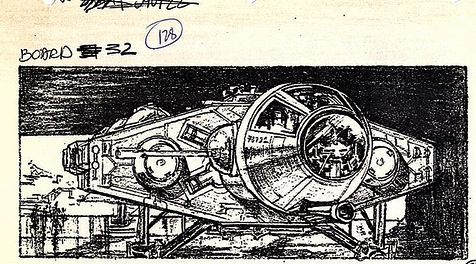
The following is my excerpt from my multimedia script on the history and importance of motion picture storyboard artists. There work is critical to the creation of complex films and they are intimately involved in the creation of the composition of shots and conceptual designs for movies.
Their work often goes unoticed by the general public but their contributions are significant.
My script is a rough draft proposal to show the behind the scenes planning of films with these artists who I often refer to as the "blueprint makers" of the movies.
Their work often goes unoticed by the general public but their contributions are significant.
My script is a rough draft proposal to show the behind the scenes planning of films with these artists who I often refer to as the "blueprint makers" of the movies.
Storyboards:
The Invisible art (Part 1)
Image : Fade IN:
Drawings from misc. productions fade in and out
Narrator
The art of cinema has been going strong for over 100 years.
It’s one of the few art forms that utilizes visual and audio sensations to create
emotional experience that envelops
Image:
Famous stills of various motion pictures from past and present DISSOLVE into
another.
Narrator
Many disciplines go into creating these images. Many are invisible.
Behind the scenes. The storyboard artist creates images that never are wind up
on screen. But the images they create help the filmmakers realize their vision.
In a sense, they are
They blueprint creators of the film
Image:
pencil drawings and concept art of various films slow zoom into Camera.
Narrator
From the rough sketches of title designer Saul Bass….
Narrator
To the richly detailed concept art of Ralph McQuarrie for
the Star Wars films.
Narrator
Storyboard artists have become the invisible navigators of
the film medium.
Image: A Storyboard
artist at work.(TBD)
Narrator
Many great directors such as Alfred Hitchcock, Steven Spielberg,
George Lucas, Francis Ford Coppola, Stanley Kubrick…
Narrator
Narrator
These images assist the production design teams; camera
crews and visual men plan their work
Narrator
Producers and production managers rely heavily on
storyboards to budget and plan expensive scenes that require a great deal
logistical work.
Image:
Production designer working in Office
Narrator
Before the actors arrive on set, the director often has visualized
the film on paper
Image: A
movie set. Cameras and Lights are everywhere…
Narrator
The art of the storyboard specialist has been around since
the advent of film
Image:
Silent film imagery from Melies, Chaplin, Griffith…
Narrator
It has since evolved into a more complex form using
computers. A technique known as Previsualization
Image: A
computer generated Previsualization sequence (Film TBD).
Subscribe to:
Posts (Atom)